Paul, apostle to the Gentiles.
(If reading on a phone or small screen, rotate to landscape mode for best viewing.)
(If reading on a phone or small screen, rotate to landscape mode for best viewing.)

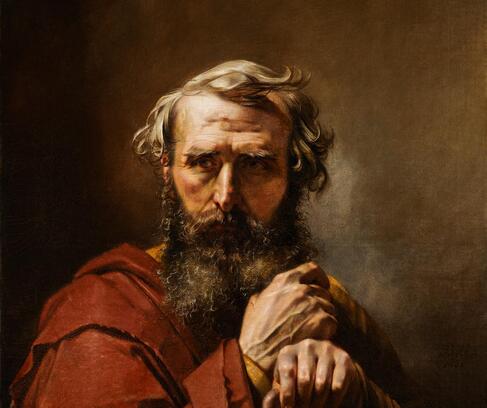
By Belgian artist Joseph Barthelemy Vieillevoye (1788-1855).
Paul, Hebrew name Saul (Acts 13:9), was born a Roman citizen (Acts 22:27-28) in the small but wealthy city of Tarsus, Cilicia (Acts 21:39; 22:3) in modern-day Turkey. Born to Jewish parents around the time of Jesus' birth, Paul/Saul was from the Hebrew tribe of Benjamin (Romans 11:1) and was named after King Saul (Israel's first monarch). He was profoundly religious and possessed a keen intellect. At the tender age of thirteen, Paul was chosen to study the Hebrew Canon in Jerusalem under the renowned Rabbi Gamaliel (Acts 22:3), a high honor. Paul was "a Hebrew of Hebrews" (Philippians 3:5), the son of a Pharisee (Acts 23:6), and a strict Pharisee himself (Acts 26:5). Paul was a fierce opponent of Christianity (Galatians 1:13). When we first met Paul, he was watching the executioner's coats as they stoned Stephen, the first Christian martyr, to death (Acts 7:58; 22:20). After Stephen's murder, Paul made it his mission to find and persecute Christians (1 Corinthians 15:9). His reputation for cruelty was well known (Acts 9:13). Going city to city, he hunted down believers, beat them, forced many to renounce their faith (26:9-11), and threw them into prison (Acts 8:3; 26:10), where many were "put to death" (Acts 22:4). After converting to Christianity (Acts 9:1-9;
22:6-11; 26:12-18), Paul joined the Christians he had been persecuting and spent the rest of his life teaching the word of God throughout the vast Roman empire. Paul's contributions to the fledgling Christian church cannot be overstated. Following Jesus' instructions to spread the word (Acts 22:21), it is estimated that he walked over 10,000 miles on three separate evangelical tours and wrote thirteen of the twenty-seven books in the New Testament. Before Paul, little had been done to bring the Gospel to Gentiles. He endured decades of hardships as he spread the Gospel, all the time supporting himself with donations and working as a tentmaker (Acts 18:3). Preaching earned Paul many enemies (1 Corinthians 16:9) who repeatedly tried to kill him (Acts 19:23-41; 20:3; 23:12). Paul was persecuted in almost every city he visited. He was driven out of Antioch (Acts 13:50), forced to flee Berea (Acts 17:13-14) and his enemies put him on trial in Achaia (Acts 18:12). Paul was whipped five times and beaten with rods three times. They tried to stone in in Iconium (Acts 14:5). They did stone him in Lystra and left him for dead (Acts 14:19). In Philippi, he was arrested, whipped, and placed in stocks (Acts 16:23-24). Paul was mobbed in Thessalonica (Acts 17:5). They would have killed him in Jerusalem if not for Roman soldiers (Acts 22). As a prisoner on his way to Rome, he was shipwrecked and washed up on an island (2 Corinthians 11:24-25). He was reviled (1 Corinthians 4:12), and in constant danger from thieves he passed on the lonely stretches of road and brethren he trusted (2 Corinthians 11:26). Paul was often sick (Galatians 4:13-14), hungry, thirsty, beaten, and homeless (1 Corinthians 4:11). He was insulted (Acts 17:17-18;17:32), called "the filth of the world" (1 Corinthians 4:13), treated "shamefully" (1 Thessalonians 2:2), and more than once forced to flee for his life (Acts 9:28-30; 17:10; 2 Corinthians 11:33). The years on the road left Paul in despair (2 Corinthians 1:8), weary, used up, and often in pain (2 Corinthians 11:27). Finally, he was chained and imprisoned for two years while he waited for his accusers to testify against him (Acts 23:35). After being released and arrested again, Paul was found guilty of a capital offense and beheaded. Called "the Apostle to the Gentiles," "the Apostle of Grace," and "a servant of God" (Titus 1:1), it is difficult to name a person more responsible for spreading Christianity.
22:6-11; 26:12-18), Paul joined the Christians he had been persecuting and spent the rest of his life teaching the word of God throughout the vast Roman empire. Paul's contributions to the fledgling Christian church cannot be overstated. Following Jesus' instructions to spread the word (Acts 22:21), it is estimated that he walked over 10,000 miles on three separate evangelical tours and wrote thirteen of the twenty-seven books in the New Testament. Before Paul, little had been done to bring the Gospel to Gentiles. He endured decades of hardships as he spread the Gospel, all the time supporting himself with donations and working as a tentmaker (Acts 18:3). Preaching earned Paul many enemies (1 Corinthians 16:9) who repeatedly tried to kill him (Acts 19:23-41; 20:3; 23:12). Paul was persecuted in almost every city he visited. He was driven out of Antioch (Acts 13:50), forced to flee Berea (Acts 17:13-14) and his enemies put him on trial in Achaia (Acts 18:12). Paul was whipped five times and beaten with rods three times. They tried to stone in in Iconium (Acts 14:5). They did stone him in Lystra and left him for dead (Acts 14:19). In Philippi, he was arrested, whipped, and placed in stocks (Acts 16:23-24). Paul was mobbed in Thessalonica (Acts 17:5). They would have killed him in Jerusalem if not for Roman soldiers (Acts 22). As a prisoner on his way to Rome, he was shipwrecked and washed up on an island (2 Corinthians 11:24-25). He was reviled (1 Corinthians 4:12), and in constant danger from thieves he passed on the lonely stretches of road and brethren he trusted (2 Corinthians 11:26). Paul was often sick (Galatians 4:13-14), hungry, thirsty, beaten, and homeless (1 Corinthians 4:11). He was insulted (Acts 17:17-18;17:32), called "the filth of the world" (1 Corinthians 4:13), treated "shamefully" (1 Thessalonians 2:2), and more than once forced to flee for his life (Acts 9:28-30; 17:10; 2 Corinthians 11:33). The years on the road left Paul in despair (2 Corinthians 1:8), weary, used up, and often in pain (2 Corinthians 11:27). Finally, he was chained and imprisoned for two years while he waited for his accusers to testify against him (Acts 23:35). After being released and arrested again, Paul was found guilty of a capital offense and beheaded. Called "the Apostle to the Gentiles," "the Apostle of Grace," and "a servant of God" (Titus 1:1), it is difficult to name a person more responsible for spreading Christianity.