|
In this lesson:
Peter's mother-in-law (1:29-31). Multitudes are healed (1:32-34). Jesus seeks solitude to pray (1:35-37). Jesus travels about Galilee (1:38-39). Jesus cleans a leper (1:40-45). Study Tip: Click on the links and review the Margin Notes in blue. |
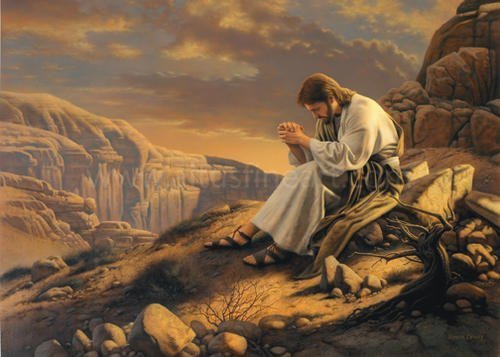
Jesus "departed into a solitary place, and there prayed."
By the British artist Simon Dewey |
Who was Moses?
Moses was a renowned Jewish prophet (Deuteronomy 34:10-12), the author of the first five books of the Old Testament (the Pentateuch), and the "mediator of the old covenant." As a revered leader, he guided approximately 3,000,000 Israelites out of Egyptian bondage, with God's help, to form a new nation.
Moses, the son of Amram and Jochebed (Exodus 6:20; 1 Chronicles 6:3), was born a Levite in 1571 BC, during a time when the Israelites were enslaved in Egypt (Exodus 1:13-14). Fearing the increasing number of Israelite slaves might rise against them (Exodus 1:10), Pharaoh Rameses ordered the midwives to kill all Hebrew male babies at birth (Exodus 1:15-16). When the midwives refused (Exodus 1:17), Pharaoh commanded that every male infant be thrown into the river (Exodus 1:22). To save Moses, his mother Jochebed hid him in a basket among the reeds of the Nile (Exodus 2:3). Pharaoh’s daughter discovered him (Exodus 2:5-6) and raised him as her own son. Moses received an education (Acts 7:22) and enjoyed all the privileges of royalty. At age forty, Moses killed an Egyptian who was mistreating a Hebrew (Exodus 2:11-12; Acts 7:23-24) and fled Egypt (Exodus 2:15), settling in Midian (Exodus 2:15) near Sinai, where he married Zipporah. For forty years, Moses lived as a shepherd (Exodus 3:1). At the age of eighty, God appeared to him in a burning bush (Exodus 3:2-22; Acts 7:30-34) and called him to return to Egypt to set the Israelites free. After God sent ten miraculous plagues upon Egypt (Exodus 7:1–12:51), Pharaoh allowed the Israelites to leave as free people. They wandered the wilderness for forty years in search of the Promised Land (Canaan).
Moses received the Mosaic Law—the First Covenant, the Ten Commandments—directly from God on Mount Sinai (Exodus 34:1-35). He prophesied the coming Messiah (John 5:46), was compared to Christ (Deuteronomy 18:15; Acts 7:37), and appeared with Jesus during the Transfiguration (Matthew 17:3-5; Mark 9:2-4; Luke 9:29-30). Moses lived to be 120 years old, spending forty years in the royal palace, forty years as a refugee in Midian, and forty years in the wilderness. He died on Mount Nebo in Moab, east of the Jordan River, without entering the Promised Land. According to Jude 1:9, Satan argued with Michael the archangel over Moses’ body, but Michael naturally won, and God buried Moses (Deuteronomy 34:5-7). Moses’ story is found throughout Exodus, Leviticus, Numbers, and Deuteronomy.
Moses was a renowned Jewish prophet (Deuteronomy 34:10-12), the author of the first five books of the Old Testament (the Pentateuch), and the "mediator of the old covenant." As a revered leader, he guided approximately 3,000,000 Israelites out of Egyptian bondage, with God's help, to form a new nation.
Moses, the son of Amram and Jochebed (Exodus 6:20; 1 Chronicles 6:3), was born a Levite in 1571 BC, during a time when the Israelites were enslaved in Egypt (Exodus 1:13-14). Fearing the increasing number of Israelite slaves might rise against them (Exodus 1:10), Pharaoh Rameses ordered the midwives to kill all Hebrew male babies at birth (Exodus 1:15-16). When the midwives refused (Exodus 1:17), Pharaoh commanded that every male infant be thrown into the river (Exodus 1:22). To save Moses, his mother Jochebed hid him in a basket among the reeds of the Nile (Exodus 2:3). Pharaoh’s daughter discovered him (Exodus 2:5-6) and raised him as her own son. Moses received an education (Acts 7:22) and enjoyed all the privileges of royalty. At age forty, Moses killed an Egyptian who was mistreating a Hebrew (Exodus 2:11-12; Acts 7:23-24) and fled Egypt (Exodus 2:15), settling in Midian (Exodus 2:15) near Sinai, where he married Zipporah. For forty years, Moses lived as a shepherd (Exodus 3:1). At the age of eighty, God appeared to him in a burning bush (Exodus 3:2-22; Acts 7:30-34) and called him to return to Egypt to set the Israelites free. After God sent ten miraculous plagues upon Egypt (Exodus 7:1–12:51), Pharaoh allowed the Israelites to leave as free people. They wandered the wilderness for forty years in search of the Promised Land (Canaan).
Moses received the Mosaic Law—the First Covenant, the Ten Commandments—directly from God on Mount Sinai (Exodus 34:1-35). He prophesied the coming Messiah (John 5:46), was compared to Christ (Deuteronomy 18:15; Acts 7:37), and appeared with Jesus during the Transfiguration (Matthew 17:3-5; Mark 9:2-4; Luke 9:29-30). Moses lived to be 120 years old, spending forty years in the royal palace, forty years as a refugee in Midian, and forty years in the wilderness. He died on Mount Nebo in Moab, east of the Jordan River, without entering the Promised Land. According to Jude 1:9, Satan argued with Michael the archangel over Moses’ body, but Michael naturally won, and God buried Moses (Deuteronomy 34:5-7). Moses’ story is found throughout Exodus, Leviticus, Numbers, and Deuteronomy.
The Gospel According to St. Mark
The King James Bible
|
Mark: 1:29-45
Jesus heals 29 And forthwith, when they were come out of the synagogue, they entered into the house of Simon and Andrew, with James and John. 30 But Simon's wife's mother lay sick of a fever, and anon they tell him of her. 31 And he came and took her by the hand, and lifted her up; and immediately the fever left her, and she ministered unto them. 32 And at even, when the sun did set, they brought unto him all that were diseased, and them that were possessed with devils. 33 And all the city was gathered together at the door. 34 And he healed many that were sick of divers diseases, and cast out many devils; and suffered not the devils to speak, because they knew him. 35 And in the morning, rising up a great while before day, he went out, and departed into a solitary place, and there prayed. 36 And Simon and they that were with him followed after him. 37 And when they had found him, they said unto him, All men seek for thee. 38 And he said unto them, Let us go into the next towns, that I may preach there also: for therefore came I forth. 39 And he preached in their synagogues throughout all Galilee, and cast out devils. 40 And there came a leper to him, beseeching him, and kneeling down to him, and saying unto him, If thou wilt, thou canst make me clean. 41 And Jesus, moved with compassion, put forth his hand, and touched him, and saith unto him, I will; be thou clean. 42 And as soon as he had spoken, immediately the leprosy departed from him, and he was cleansed. 43 And he straitly charged him, and forthwith sent him away; 44 And saith unto him, See thou say nothing to any man: but go thy way, shew thyself to the priest, and offer for thy cleansing those things which Moses commanded, for a testimony unto them. 45 But he went out, and began to publish it much, and to blaze abroad the matter, insomuch that Jesus could no more openly enter into the city, but was without in desert places: and they came to him from every quarter. |
Margin notes:
"And forthwith, when they were come out of the synagogue." (1:29) - Means "And immediately, when they left the synagogue." Jesus left the synagogue after ridding the man of a demon (Mark 1:21-28). "And anon they tell him of her." (1:30) - "And immediately they told Jesus about her (Peter's mother-in-law)." "And at even, when the sun did set." (1:32) - "In the evening, when the sun set." People had to wait until evening to seek out Jesus because it was the Sabbath (1:21) and against Jewish law to travel until sunset. "All that were diseased, and them that were possessed with devils." (1:32) - Notice there is a distinction between those who are ill and those who are possessed. "He healed many that were sick of divers diseases." (1:34) - "He healed many (people) that were sick from various diseases." By now, the news of Jesus healing the demoniac and Peter's mother-in-law had spread throughout Capernaum, creating large crowds. "Cast out many devils; and suffered not the devils to speak, because they knew him." (1:34) - "(Jesus) cast out many demons and didn't allow them to speak because they knew Him." Even demons know who Jesus is (James 2:19), but the Messiah silenced them before they prematurely revealed His identity to the crowd. "Rising up a great while before day, he went out, and departed into a solitary place, and there prayed." (1:35) - "Getting up early in the morning before sunrise, Jesus went out alone to pray." If the Messiah needs to talk to God, how much more do we? "Followed after him." (1:36) - "Searched for Him." "For therefore came I forth." (1:38) - "That's why I came." Jesus came "to minister, and to give his life a ransom for many" (Mark 10:45). "A leper." (1:40) - A person with leprosy. Leprosy is a highly contagious disease affecting the skin and nerves, often causing disfigurement. There are several forms of leprosy, with varying degrees of contagiousness. Leprosy is transmitted through direct personal contact, especially from open sores, and can incubate for up to thirty years. Recovery was rare in ancient times; the disease often led to paralysis, gangrene, amputation, and death. In Jesus' time, leprosy was viewed as a punishment from God, and lepers were treated harshly. They were banished from society, considered "defiled" (Leviticus 13:46; Numbers 5:2-3), had their clothes burned, and their heads shaved. Lepers were required to keep their distance from others and announce, "I'm unclean, unclean" if anyone approached. (Leviticus 13:45). People would have been shocked to see Jesus touch a leper (Luke 5:13). Today, leprosy is commonly called Hansen's disease. "Touched him." (1:41) - Since Jews considered lepers unclean, a priest would never have touched one. When Jesus reached out His hand to the leper, it showed the crowd that He was different from other religious leaders. "He straitly charged him." (1:43) - "He sternly warned him." "Offer for thy cleansing those things which Moses commanded." (1:44) - A cured leper had to complete a strict religious routine according to the Law of Moses (Leviticus 14:1-32). "He went out, and began to publish it much, and to blaze abroad the matter." (1:45) - Means "He (the leper) went out and broadcast his healing and spread the news." The leper was so elated to be cured that he could not keep it a secret. The news spread, forcing Jesus to leave the city to escape the excited crowds seeking a miracle of their own. See "Today's Question" below. |
To study additional accounts of these same healings, read Matthew 8:14-17 (lesson 14) and Luke 4:38-41.
New Living Translation
Mark: 1:29-45
Jesus Heals Many People
29 After Jesus left the synagogue with James and John, they went to Simon and Andrew's home.
30 Now Simon's mother-in-law was sick in bed with a high fever. They told Jesus about her right away.
31 So he went to her bedside, took her by the hand, and helped her sit up. Then the fever left her, and she prepared a meal for them.
32 That evening after sunset, many sick and demon-possessed people were brought to Jesus.
33 The whole town gathered at the door to watch.
34 So Jesus healed many people who were sick with various diseases, and he cast out many demons. But because the demons knew who he was, he did not allow them to speak.
Jesus Preaches in Galilee
35 Before daybreak the next morning, Jesus got up and went out to an isolated place to pray.
36 Later Simon and the others went out to find him.
37 When they found him, they said, "Everyone is looking for you."
38 But Jesus replied, "We must go on to other towns as well, and I will preach to them, too. That is why I came."
39 So he traveled throughout the region of Galilee, preaching in the synagogues and casting out demons.
Jesus Heals a Man with Leprosy
40 A man with leprosy came and knelt in front of Jesus, begging to be healed. "If you are willing, you can heal me and make me clean," he said.
41 Moved with compassion, Jesus reached out and touched him. "I am willing," he said. "Be healed!"
42 Instantly the leprosy disappeared, and the man was healed.
43 Then Jesus sent him on his way with a stern warning:
44 "Don't tell anyone about this. Instead, go to the priest and let him examine you. Take along the offering required in the law of Moses for those who have been healed of leprosy. This will be a public testimony that you have been cleansed."
45 But the man went and spread the word, proclaiming to everyone what had happened. As a result, large crowds soon surrounded Jesus, and he couldn't publicly enter a town anywhere. He had to stay out in the secluded places, but people from everywhere kept coming to him.
This second Bible text from the "New Living Translation" (Tyndale House, Publishers, Wheaton, Illinois) is a paraphrase, not an accurate word-for-word translation of the Bible. However, it is a helpful tool when read with the "King James Version."
Jesus Heals Many People
29 After Jesus left the synagogue with James and John, they went to Simon and Andrew's home.
30 Now Simon's mother-in-law was sick in bed with a high fever. They told Jesus about her right away.
31 So he went to her bedside, took her by the hand, and helped her sit up. Then the fever left her, and she prepared a meal for them.
32 That evening after sunset, many sick and demon-possessed people were brought to Jesus.
33 The whole town gathered at the door to watch.
34 So Jesus healed many people who were sick with various diseases, and he cast out many demons. But because the demons knew who he was, he did not allow them to speak.
Jesus Preaches in Galilee
35 Before daybreak the next morning, Jesus got up and went out to an isolated place to pray.
36 Later Simon and the others went out to find him.
37 When they found him, they said, "Everyone is looking for you."
38 But Jesus replied, "We must go on to other towns as well, and I will preach to them, too. That is why I came."
39 So he traveled throughout the region of Galilee, preaching in the synagogues and casting out demons.
Jesus Heals a Man with Leprosy
40 A man with leprosy came and knelt in front of Jesus, begging to be healed. "If you are willing, you can heal me and make me clean," he said.
41 Moved with compassion, Jesus reached out and touched him. "I am willing," he said. "Be healed!"
42 Instantly the leprosy disappeared, and the man was healed.
43 Then Jesus sent him on his way with a stern warning:
44 "Don't tell anyone about this. Instead, go to the priest and let him examine you. Take along the offering required in the law of Moses for those who have been healed of leprosy. This will be a public testimony that you have been cleansed."
45 But the man went and spread the word, proclaiming to everyone what had happened. As a result, large crowds soon surrounded Jesus, and he couldn't publicly enter a town anywhere. He had to stay out in the secluded places, but people from everywhere kept coming to him.
This second Bible text from the "New Living Translation" (Tyndale House, Publishers, Wheaton, Illinois) is a paraphrase, not an accurate word-for-word translation of the Bible. However, it is a helpful tool when read with the "King James Version."
Key verses from this passage
"And he came and took her by the hand, and lifted her up; and immediately the fever left her, and she ministered unto them." (1:31)
"And at even, when the sun did set, they brought unto him all that were diseased, and them that were possessed with devils. And all the city was gathered together at the door. And he healed many that were sick of divers diseases, and cast out many devils; and suffered not the devils to speak, because they knew him." (1:32-34)
"And he preached in their synagogues throughout all Galilee, and cast out devils." (1:39)
"And at even, when the sun did set, they brought unto him all that were diseased, and them that were possessed with devils. And all the city was gathered together at the door. And he healed many that were sick of divers diseases, and cast out many devils; and suffered not the devils to speak, because they knew him." (1:32-34)
"And he preached in their synagogues throughout all Galilee, and cast out devils." (1:39)
Today's Question:
1. Why did Jesus tell the leper to "say nothing" about how he was healed? (1:44)
Putting verses into your own words helps you get more meaning out of them.
1. Why did Jesus tell the leper to "say nothing" about how he was healed? (1:44)
Putting verses into your own words helps you get more meaning out of them.
Answer: (Do you agree?)
1. Jesus’ seemingly simple instruction had a significant purpose. He did not want His miracles to become the main focus of His ministry. If word spread about the healed leper, large crowds might gather out of curiosity, seeking spectacle rather than truth. More importantly, Jesus was outmaneuvering the Pharisees. According to the Mosaic Law, a leper was not truly considered cured or permitted to reenter society until examined and declared clean by a priest (Leviticus 14:1-3). Jesus wanted the man to present himself to the priests and be officially declared clean before they knew Jesus had healed him. Once the priest pronounced the leper clean, the religious leaders could not deny the healing or accuse Jesus of deception. If the news of Jesus’ miracle reached the Pharisees first, they might have refused to acknowledge the healing as genuine.
Application thought for the day:
Time and again, the Bible shows Jesus praying (1:35). If even the Messiah needed to speak with God, how much more important is it for us to pray? Set aside time every day to acknowledge God, thank Him for both your physical and spiritual needs, and ask for guidance and strength as you go about your day. Your prayers don’t have to be lengthy. Even a few minutes as you prepare to start your day, as you lie in bed at night, or while driving alone before turning on the radio can become meaningful moments of connection with God. Don’t miss the opportunity to talk with your Creator—prayer brings countless rewards. Make it a daily habit.
Your donation puts free Bible lessons in the hands of unbelievers.
Thank you for helping us reach more people.
Small gifts, big impact.
Thank you for helping us reach more people.
Small gifts, big impact.
Visit us on social media below
Explore hundreds of our original postings.
Thanks to the writings and commentary of John Wesley and Adam Clarke. Also, "The Layman's Bible Study Notebook" by Irving Jensen, published by Harvest House Publishing, Irvine, California; the "Life Change Series," published by NavPress books, Colorado Springs, Colorado; "Robertson's New Testament Word Studies;" "The MacArthur Bible Commentary" by John MacArthur, published by Thomas Nelson, Nashville, Tennessee; "Wisdom of the Bible" CD by Topics Entertainment, Inc., Renton, Washington for their inspiring pictures; "My utmost for His Highest" by Oswald Chambers, published by Barbour Publishing, Inc., Uhrichsville, Ohio; The "Treasury of Scriptural Knowledge" by Reuben Archer Torrey; "Hope For Each Day" by Billy Graham, published by J. Countryman, a division of Thomas Nelson, Inc., Nashville, Tennessee; "Easton's Bible Dictionary" by Matthew George Easton; "Unger's Bible Dictionary" by Merrill F. Unger, published by Moody Press, Chicago, Illinois; "Atlas of the Bible" edited by Joseph L. Gardner, published by Reader's Digest, Pleasantville, New York; "Halley's Bible Handbook" by Henry H. Halley, Zondervan Publishing House, Grand Rapids, Michigan; "The Everyday Bible," published by World Wide Publications, Minneapolis, Minnesota; "The New Testament" Recovery Version, published by Living Stream Ministry, Anaheim, California; "The Living New Testament," published by Tyndale house, Wheaten, Illinois; "The New Living Translation," published by Tyndale House, Wheaten, Illinois; "The New Testament" translated from the Latin Vulgate, published by Guild Press, New York, New York; the "Life Application Study Bible," published by Tyndale House Publishing, Carol Stream, Illinois; the "Quest Study Bible," published by The Zondervan Corporation, Grand Rapids, Michigan; "The New Scofield Reference Bible," published by Oxford University Press, New York, New York; BibleGateway.com for all their wonderful links; and of course, the "King James Bible." All were critical in putting these lessons together.
© 2026 evolke
© 2026 evolke