|
In this lesson:
Disciples complain and quit. Belief and disbelief. "To whom shall we go?" Study Tip: Pray as you study the Bible and trust your informed interpretations. God will open your heart and pour in more knowledge as you're ready to receive it. |

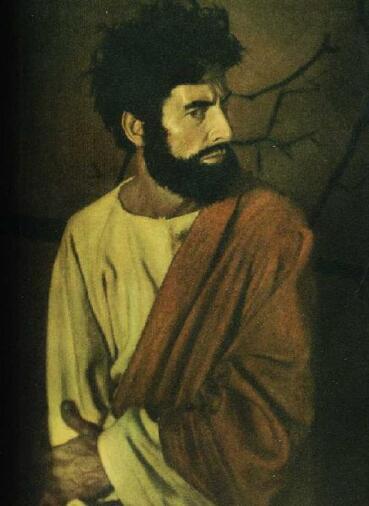
Judas Iscariot.
By an unknown artist. |
Who was -
Judas Iscariot -
Iscariot is Hebrew for "man of Kerioth," a town in southern Judea. Judas was the son of Simon Iscariot (John 6:71; 12:4;
13:2; 13:26) and one of the original twelve disciples (Matthew 10:4; Mark 3:19; Luke 6:16). He is the only one of the twelve who was not a Galilean. Judas was a thief (John 12:6) who joined Jesus and was put in charge of the group's finances (John 13:29). Jesus predicted that he would be betrayed (Matthew 26:21-25; John 6:70-71; 13:21), and soon
after the prophecy, Judas sold out the Messiah (Mark 14:10; Luke 22:3-4; John 13:2) for "thirty pieces of silver" (Matthew 26:14-16). He then committed suicide (Matthew 27:5) out of remorse. Whenever the Bible names the twelve disciples, Judas is always listed last (Matthew 10:2-4).
Judas Iscariot -
Iscariot is Hebrew for "man of Kerioth," a town in southern Judea. Judas was the son of Simon Iscariot (John 6:71; 12:4;
13:2; 13:26) and one of the original twelve disciples (Matthew 10:4; Mark 3:19; Luke 6:16). He is the only one of the twelve who was not a Galilean. Judas was a thief (John 12:6) who joined Jesus and was put in charge of the group's finances (John 13:29). Jesus predicted that he would be betrayed (Matthew 26:21-25; John 6:70-71; 13:21), and soon
after the prophecy, Judas sold out the Messiah (Mark 14:10; Luke 22:3-4; John 13:2) for "thirty pieces of silver" (Matthew 26:14-16). He then committed suicide (Matthew 27:5) out of remorse. Whenever the Bible names the twelve disciples, Judas is always listed last (Matthew 10:2-4).
The Gospel According to St. John
The King James Bible
|
John 6:60-71
The Holy Spirit gives life 60 Many therefore of his disciples, when they had heard this, said, This is an hard saying; who can hear it? 61 When Jesus knew in himself that his disciples murmured at it, he said unto them, Doth this offend you? 62 What and if ye shall see the Son of man ascend up where he was before? 63 It is the spirit that quickeneth; the flesh profiteth nothing: the words that I speak unto you, they are spirit, and they are life. 64 But there are some of you that believe not. For Jesus knew from the beginning who they were that believed not, and who should betray him. 65 And he said, Therefore said I unto you, that no man can come unto me, except it were given unto him of my Father. 66 From that time many of his disciples went back, and walked no more with him. 67 Then said Jesus unto the twelve, Will ye also go away? 68 Then Simon Peter answered him, Lord, to whom shall we go? thou hast the words of eternal life. 69 And we believe and are sure that thou art that Christ, the Son of the living God. 70 Jesus answered them, Have not I chosen you twelve, and one of you is a devil? 71 He spake of Judas Iscariot the son of Simon: for he it was that should betray him, being one of the twelve. |
Margin notes:
"Many therefore of his disciples." (6:60) - Jesus had many followers, not just His twelve disciples. "This is an hard saying; who can hear it?" (6:60) - Means Jesus calling Himself "the bread of life" in verses 6:53-58 (lesson 178) was difficult to understand. "It is the spirit that quickeneth." (6:63) - "It is the spirit that gives (eternal) life (Romans 8:2; 2 Corinthians 3:6)." "The flesh profiteth nothing." (6:63) - Means we are not promised an eternal life simply because we were born. We need to be spiritually reborn (John 1:13). "Some of you that believe not." (6:64) - This is the second time in chapter six that Jesus tells His disciples that some of them don't believe (John 6:36). "Jesus knew from the beginning." (6:64) - Being God, Jesus knows all things. "No man can come unto me, except it were given unto him of my Father." (6:65) - Jesus is reinforcing this message from verse 6:44. "Many of his disciples went back, and walked no more with him." (6:66) - "Many of Jesus' disciples turned back and left Him." "Will ye also go away?" (6:67) - "A penetrating question. Our Lord's words come home most when He talks in the most simple way. We know Who Jesus is, but in spite of that He says - "Will ye also go away?" We have to maintain a venturing attitude toward Him all the time." (From "My Utmost for His Highest" by Oswald Chambers; published by Barbour Publishing, Inc., Uhrichsville, Ohio) |
New Living Translation
John 6:60-71
Many Disciples Desert Jesus
60 Many of his disciples said, "This is very hard to understand. How can anyone accept it?"
61 Jesus was aware that his disciples were complaining, so he said to them, "Does this offend you?
62 Then what will you think if you see the Son of Man ascend to heaven again?
63 The Spirit alone gives eternal life. Human effort accomplishes nothing. And the very words I have spoken to you are spirit and life.
64 But some of you do not believe me." (For Jesus knew from the beginning which ones didn't believe, and he knew who would betray him.)
65 Then he said, "That is why I said that people can't come to me unless the Father gives them to me."
66 At this point many of his disciples turned away and deserted him.
67 Then Jesus turned to the Twelve and asked, "Are you also going to leave?"
68 Simon Peter replied, "Lord, to whom would we go? You have the words that give eternal life.
69 We believe, and we know you are the Holy One of God."
70 Then Jesus said, "I chose the twelve of you, but one is a devil."
71 He was speaking of Judas, son of Simon Iscariot, one of the Twelve, who would later betray him.
This second Bible text from the "New Living Translation" (Tyndale House, Publishers, Wheaton, Illinois) is a paraphrase and not an accurate word for word translation of the Bible. However, it is a helpful tool when read with the "King James Version."
Many Disciples Desert Jesus
60 Many of his disciples said, "This is very hard to understand. How can anyone accept it?"
61 Jesus was aware that his disciples were complaining, so he said to them, "Does this offend you?
62 Then what will you think if you see the Son of Man ascend to heaven again?
63 The Spirit alone gives eternal life. Human effort accomplishes nothing. And the very words I have spoken to you are spirit and life.
64 But some of you do not believe me." (For Jesus knew from the beginning which ones didn't believe, and he knew who would betray him.)
65 Then he said, "That is why I said that people can't come to me unless the Father gives them to me."
66 At this point many of his disciples turned away and deserted him.
67 Then Jesus turned to the Twelve and asked, "Are you also going to leave?"
68 Simon Peter replied, "Lord, to whom would we go? You have the words that give eternal life.
69 We believe, and we know you are the Holy One of God."
70 Then Jesus said, "I chose the twelve of you, but one is a devil."
71 He was speaking of Judas, son of Simon Iscariot, one of the Twelve, who would later betray him.
This second Bible text from the "New Living Translation" (Tyndale House, Publishers, Wheaton, Illinois) is a paraphrase and not an accurate word for word translation of the Bible. However, it is a helpful tool when read with the "King James Version."
Key verses from this passage
"And he said, Therefore said I unto you, that no man can come unto me, except it were given unto him of my Father." (6:65)
"Then Simon Peter answered him, Lord, to whom shall we go? thou hast the words of eternal life. And we believe and are sure that thou art that Christ, the Son of the living God." (6:68-69)
Today's Question:
1.Why did so many followers leave Jesus? (6:66)
The most critical step in Bible study is applying what you learn to your life.
1.Why did so many followers leave Jesus? (6:66)
The most critical step in Bible study is applying what you learn to your life.
Answer: (Do you agree?)
1. In this passage, we see some disciples desert Christ because His teachings were "hard" to understand and accept (6:60).
Others left because they found Jesus' words offensive (6:61). In other passages of the Bible, we see people abandon Jesus because He wasn't a military hero come to liberate them from Rome. Still others refused to follow Him because He asked them to change their hearts, and they didn't want to let go of their selfish, sinful ways. There is no compromise with Jesus; you either believe or don't believe. Christians should trust in Christ, particularly when facing hardships or doubt.
Application thought for the day:
When facing a crisis of doubt, ask yourself the same question Peter asked, if not Jesus; "To whom shall we go?" (6:67)
Tip Jar
Help us send Free Bible Lessons to new believers.
Your donation makes this a better world.
A small donation makes a big impact.
Help us send Free Bible Lessons to new believers.
Your donation makes this a better world.
A small donation makes a big impact.
Visit us on Facebook and Instagram below
to explore hundreds of our original postings.
Thanks to the writings and commentary of John Wesley and Adam Clarke. Also, "The Layman's Bible Study Notebook" by Irving Jensen published by Harvest House Publishing, Irvine, California; the "Life Change Series" published by NavPress Books, Colorado Springs, Colorado; the "Life Application Study Bible" published by Tyndale House Publishing, Carol Stream, Illinois; the "Quest Study Bible" published by The Zondervan Corporation, Grand Rapids, Michigan; "Robertson's New Testament Word Studies; " "The MacArthur Bible Commentary" by John MacArthur published by Thomas Nelson, Nashville, Tennessee; "Wisdom of the Bible" CD by Topics Entertainment, Inc., Renton, Washington for their inspiring pictures; "My utmost for His Highest" by Oswald Chambers published by Barbour Publishing, Inc., Uhrichsville, Ohio; The "Treasury of Scriptural Knowledge" by Reuben Archer Torrey; "Hope For Each Day" by Billy Graham published by J. Countryman, a division of Thomas Nelson, Inc., Nashville, Tennessee; "Easton's Bible Dictionary" by Matthew George Easton; "Unger's Bible Dictionary" by Merrill F. Unger, published by Moody Press, Chicago, Illinois; "Halley's Bible Handbook" by Henry H. Halley, Zondervan Publishing House, Grand Rapids, Michigan; "The Everyday Bible" published by World Wide Publications, Minneapolis, Minnesota; "The Living New Testament" published by Tyndale house; "The New Living Translation" published by Tyndale House; "The New Testament" translated from the Latin Vulgate, published by Guild Press, New York, New York; BibleGateway.com for all their wonderful links; and of course the "King James Bible." All were critical in putting these lessons together.
© 2026 evolke
© 2026 evolke