What is:
Blasphemy -
To blasphemy is to slander, insult (through words or actions) or to speak irreverently of God, His authority, or grandeur. The Old Testament named blasphemy as one of the worst sins, punishable by death (Leviticus 24:16). The New Testament calls blasphemy the unforgivable sin (Matthew 12:31-32; Mark 3:28-29; Luke 12:10). Unforgiveable, because the sinner will not ask for forgiveness. Blasphemy isn't just a one time mistake made in a time of spiritual uncertainty, it's an ongoing attitude of rebellion against God.

Blasphemy -
To blasphemy is to slander, insult (through words or actions) or to speak irreverently of God, His authority, or grandeur. The Old Testament named blasphemy as one of the worst sins, punishable by death (Leviticus 24:16). The New Testament calls blasphemy the unforgivable sin (Matthew 12:31-32; Mark 3:28-29; Luke 12:10). Unforgiveable, because the sinner will not ask for forgiveness. Blasphemy isn't just a one time mistake made in a time of spiritual uncertainty, it's an ongoing attitude of rebellion against God.

The Gospel According to St. Mark
The King James Bible
|
Mark 14:53-72
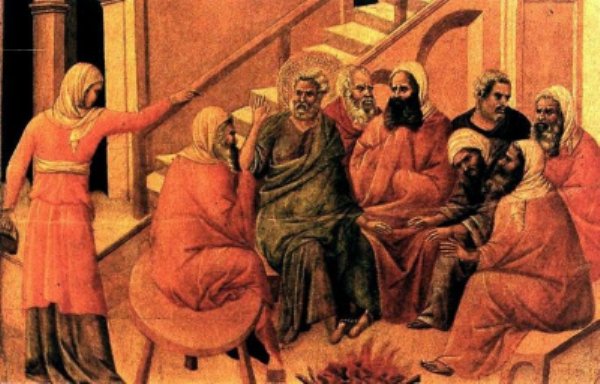
Jesus is spit on and beaten 53 And they led Jesus away to the high priest: and with him were assembled all the chief priests and the elders and the scribes. 54 And Peter followed him afar off, even into the palace of the high priest: and he sat with the servants, and warmed himself at the fire. 55 And the chief priests and all the council sought for witness against Jesus to put him to death; and found none. 56 For many bare false witness against him, but their witness agreed not together. 57 And there arose certain, and bare false witness against him, saying, 58 We heard him say, I will destroy this temple that is made with hands, and within three days I will build another made without hands. 59 But neither so did their witness agree together. 60 And the high priest stood up in the midst, and asked Jesus, saying, Answerest thou nothing? what is it which these witness against thee? 61 But he held his peace, and answered nothing. Again the high priest asked him, and said unto him, Art thou the Christ, the Son of the Blessed? 62 And Jesus said, I am: and ye shall see the Son of man sitting on the right hand of power, and coming in the clouds of heaven. 63 Then the high priest rent his clothes, and saith, What need we any further witnesses? 64 Ye have heard the blasphemy: what think ye? And they all condemned him to be guilty of death. 65 And some began to spit on him, and to cover his face, and to buffet him, and to say unto him, Prophesy: and the servants did strike him with the palms of their hands. 66 And as Peter was beneath in the palace, there cometh one of the maids of the high priest: 67 And when she saw Peter warming himself, she looked upon him, and said, And thou also wast with Jesus of Nazareth. 68 But he denied, saying, I know not, neither understand I what thou sayest. And he went out into the porch; and the cock crew. 69 And a maid saw him again, and began to say to them that stood by, This is one of them. 70 And he denied it again. And a little after, they that stood by said again to Peter, Surely thou art one of them: for thou art a Galilaean, and thy speech agreeth thereto. 71 But he began to curse and to swear, saying, I know not this man of whom ye speak. 72 And the second time the cock crew. And Peter called to mind the word that Jesus said unto him, Before the cock crow twice, thou shalt deny me thrice. And when he thought thereon, he wept. |
Margin notes:
"They led Jesus away to the high priest." (14:53) - The Jewish high priest was Joseph Caiaphas who was appointed by Pontius Pilate's predecessor, the Roman governor of Judaea Valerius Gratus. Caiaphas served as the leader of the Sanhedrin for eighteen years (A.D. 18-36) and plotted Jesus' arrest, trial, and then pressured Pilate into crucifying Him. Later, he tried to cover up the resurrection (Matthew 28:11-15) and spent years persecuting Christians, including John and Peter (Acts 4:6-10). He was eventually removed from office by the Romans. Caiaphas was married to the former high priest Annas' daughter (John 18:13). What finally became of Caiaphas is unknown although legend has it that he converted to Christianity. "The council." (14:55) - Called the Sanhedrin, the council was the Jewish high court, a powerful religious and political committee made up of seventy-one chief priests, elders, scribes, and other religious leaders (Matthew 26:3; 26:59). They settled religious disputes and handled matters pertaining to Judaism. The Sanhedrin was given far-ranging authority by the Roman occupiers and had its own police force which could arrest people. But because they had abused their power and executed people friendly to Rome on trumped up charges, they were no longer allowed to issue the death penalty (John 18:31). For that, they needed the Romans. This late-night meeting of the council was unusual. Since this was a rigged trial with a predetermined outcome (Luke 22:2), perhaps they didn't want to conduct it in the light of day. "Sought for witness against Jesus." (14:55) - "Looked for evidence against Jesus." "Many bare false witness against him." (14:56) - As prophesied centuries earlier in Psalm 35:11. "And there arose certain." (14:57) - "And certain men stood up." "I will destroy this temple that is made with hands, and within three days I will build another made without hands." (14:58) - The false witnesses twisted Jesus' words. When Jesus said, "Destroy this temple, and in three days, I will raise it up" (John 2:19), He was predicting His resurrection. "He held his peace." (14:61) - Just as prophesized six hundred years earlier in Isaiah 53:7, Jesus refused to answer the false charges brought against Him. "I am." (14:62) - A direct, straight forward answer that leaves no doubt as to who Jesus is. "The right hand of power." (14:62) - "The right hand of God." "The high priest rent his clothes." (14:63) - Tearing at your clothes was a sign of angst or anger (Genesis 37:29). "They all condemned him." (14:64) - Only sixty-nine of the seventy-one council members were present that night. The two absent members, Nicodemus and Joseph of Arimathea, were sympathetic to Jesus. After the crucifixion, it was Joseph who saw that Jesus was buried (Mark 15:43-47). "Cover his face, and to buffet him." (14:65) - They blindfolded Jesus and beat Him. "Prophesy." (14:65) - His tormentors taunted Jesus and told Him to guess who was hitting Him while blindfolded. "He went out into the porch." (14:68) - "He went out to the entranceway." "Thy speech agreeth thereto." (14:70) - "Your accent proves it." "When he thought thereon, he wept." (14:72) - "When he thought about it, he cried." |
To read Jesus' prediction of Peter's denial see Matthew 26:31-35 (lesson 55), Mark 14:29-31 (lesson 95), Luke 22:31-34 and John 13:36-38.
New Living Translation
Mark 14:53-72
Jesus before the Council
53 They took Jesus to the high priest's home where the leading priests, the elders, and the teachers of religious law had gathered.
54 Meanwhile, Peter followed him at a distance and went right into the high priest's courtyard. There he sat with the guards, warming himself by the fire.
55 Inside, the leading priests and the entire high council were trying to find evidence against Jesus, so they could put him to death. But they couldn't find any.
56 Many false witnesses spoke against him, but they contradicted each other.
57 Finally, some men stood up and gave this false testimony:
58 "We heard him say, 'I will destroy this Temple made with human hands, and in three days I will build another, made without human hands.'"
59 But even then they didn't get their stories straight!
60 Then the high priest stood up before the others and asked Jesus, "Well, aren't you going to answer these charges? What do you have to say for yourself?"
61 But Jesus was silent and made no reply. Then the high priest asked him, "Are you the Messiah, the Son of the Blessed One?"
62 Jesus said, "I Am. And you will see the Son of Man seated in the place of power at God's right hand and coming on the clouds of heaven."
63 Then the high priest tore his clothing to show his horror and said, "Why do we need other witnesses?
64 You have all heard his blasphemy. What is your verdict?"
"Guilty!" they all cried. "He deserves to die!"
65 Then some of them began to spit at him, and they blindfolded him and beat him with their fists. "Prophesy to us," they jeered. And the guards slapped him as they took him away.
Peter Denies Jesus
66 Meanwhile, Peter was in the courtyard below. One of the servant girls who worked for the high priest came by
67 and noticed Peter warming himself at the fire. She looked at him closely and said, "You were one of those with Jesus of Nazareth."
68 But Peter denied it. "I don't know what you're talking about," he said, and he went out into the entryway. Just then, a rooster crowed.
69 When the servant girl saw him standing there, she began telling the others, "This man is definitely one of them!"
70 But Peter denied it again.
A little later some of the other bystanders confronted Peter and said, "You must be one of them, because you are a Galilean."
71 Peter swore, "A curse on me if I'm lying-I don't know this man you're talking about!"
72 And immediately the rooster crowed the second time.
Suddenly, Jesus' words flashed through Peter's mind: "Before the rooster crows twice, you will deny three times that you even know me." And he broke down and wept.
This second Bible text from the "New Living Translation" (Tyndale House, Publishers, Wheaton, Illinois) is a paraphrase and not an accurate word for word translation of the Bible. However, it is a helpful tool when read with the "King James Version."
Jesus before the Council
53 They took Jesus to the high priest's home where the leading priests, the elders, and the teachers of religious law had gathered.
54 Meanwhile, Peter followed him at a distance and went right into the high priest's courtyard. There he sat with the guards, warming himself by the fire.
55 Inside, the leading priests and the entire high council were trying to find evidence against Jesus, so they could put him to death. But they couldn't find any.
56 Many false witnesses spoke against him, but they contradicted each other.
57 Finally, some men stood up and gave this false testimony:
58 "We heard him say, 'I will destroy this Temple made with human hands, and in three days I will build another, made without human hands.'"
59 But even then they didn't get their stories straight!
60 Then the high priest stood up before the others and asked Jesus, "Well, aren't you going to answer these charges? What do you have to say for yourself?"
61 But Jesus was silent and made no reply. Then the high priest asked him, "Are you the Messiah, the Son of the Blessed One?"
62 Jesus said, "I Am. And you will see the Son of Man seated in the place of power at God's right hand and coming on the clouds of heaven."
63 Then the high priest tore his clothing to show his horror and said, "Why do we need other witnesses?
64 You have all heard his blasphemy. What is your verdict?"
"Guilty!" they all cried. "He deserves to die!"
65 Then some of them began to spit at him, and they blindfolded him and beat him with their fists. "Prophesy to us," they jeered. And the guards slapped him as they took him away.
Peter Denies Jesus
66 Meanwhile, Peter was in the courtyard below. One of the servant girls who worked for the high priest came by
67 and noticed Peter warming himself at the fire. She looked at him closely and said, "You were one of those with Jesus of Nazareth."
68 But Peter denied it. "I don't know what you're talking about," he said, and he went out into the entryway. Just then, a rooster crowed.
69 When the servant girl saw him standing there, she began telling the others, "This man is definitely one of them!"
70 But Peter denied it again.
A little later some of the other bystanders confronted Peter and said, "You must be one of them, because you are a Galilean."
71 Peter swore, "A curse on me if I'm lying-I don't know this man you're talking about!"
72 And immediately the rooster crowed the second time.
Suddenly, Jesus' words flashed through Peter's mind: "Before the rooster crows twice, you will deny three times that you even know me." And he broke down and wept.
This second Bible text from the "New Living Translation" (Tyndale House, Publishers, Wheaton, Illinois) is a paraphrase and not an accurate word for word translation of the Bible. However, it is a helpful tool when read with the "King James Version."
Key verses from this passage
"And they led Jesus away to the high priest: and with him were assembled all the chief priests and the elders and the scribes." (14:53)
"And the chief priests and all the council sought for witness against Jesus to put him to death; and found none. For many bare false witness against him, but their witness agreed not together." (14:55-56)
"And the high priest stood up in the midst, and asked Jesus, saying, Answerest thou nothing? what is it which these witness against thee? But he held his peace, and answered nothing. Again the high priest asked him, and said unto him, Art thou the Christ, the Son of the Blessed? And Jesus said, I am: and ye shall see the Son of man sitting on the right hand of power, and coming in the clouds of heaven." (14:60-62)
"And he denied it again. And a little after, they that stood by said again to Peter, Surely thou art one of them: for thou art a Galilaean, and thy speech agreeth thereto. But he began to curse and to swear, saying, I know not this man of whom ye speak. And the second time the cock crew. And Peter called to mind the word that Jesus said unto him, Before the cock crow twice, thou shalt deny me thrice. And when he thought thereon, he wept." (14:70-72)
"And the chief priests and all the council sought for witness against Jesus to put him to death; and found none. For many bare false witness against him, but their witness agreed not together." (14:55-56)
"And the high priest stood up in the midst, and asked Jesus, saying, Answerest thou nothing? what is it which these witness against thee? But he held his peace, and answered nothing. Again the high priest asked him, and said unto him, Art thou the Christ, the Son of the Blessed? And Jesus said, I am: and ye shall see the Son of man sitting on the right hand of power, and coming in the clouds of heaven." (14:60-62)
"And he denied it again. And a little after, they that stood by said again to Peter, Surely thou art one of them: for thou art a Galilaean, and thy speech agreeth thereto. But he began to curse and to swear, saying, I know not this man of whom ye speak. And the second time the cock crew. And Peter called to mind the word that Jesus said unto him, Before the cock crow twice, thou shalt deny me thrice. And when he thought thereon, he wept." (14:70-72)
Today's Question:
1. Why didn't the Jewish High Council recognize Jesus as the Messiah? (14:64)
The most vital step in Bible study is applying what you learn to your life.
1. Why didn't the Jewish High Council recognize Jesus as the Messiah? (14:64)
The most vital step in Bible study is applying what you learn to your life.
Answer: (Do you agree?)
1. The religious leaders of Jerusalem knew the Scriptures and should have known Jesus was the Messiah from the Old Testament prophecies. As prophesied, Jesus performed "many miracles' (John 11:47). Many scribes and Pharisees witnessed them firsthand (Matthew 12:9-14; 21:14-15; Mark 3:1-6; Luke 6:6-11). Still, most didn't believe. Although it was their responsibility to lead people to God, the religious leaders in Jesus' day were more interested in maintaining their authority and keeping their positions of power. This blinded them to the truth of Christ's divinity.
Application thought for the day:
What spiritual applications can you find in this segment?
Visit us on social media below.
Explore hundreds of our original postings.
Thanks to the writings and commentary of John Wesley and Adam Clarke. Also, "The Layman's Bible Study Notebook" by Irving Jensen published by Harvest House Publishing, Irvine, California; the "Life Change Series" published by NavPress Books, Colorado Springs, Colorado; the "Life Application Study Bible" published by Tyndale House Publishing, Carol Stream, Illinois; "The Quest Study Bible" published by The Zondervan Corporation, Grand Rapids, Michigan; "Robertson's New Testament Word Studies"; "The MacArthur Bible Commentary" by John MacArthur published by Thomas Nelson, Nashville, Tennessee; "Wisdom of the Bible" CD by Topics Entertainment, Inc., Renton, Washington for their inspiring pictures; "My utmost for His Highest" by Oswald Chambers published by Barbour publishing, Inc., Uhrichsville, Ohio; The "Treasury of Scriptural Knowledge" by Reuben Archer Torrey; "Hope For Each Day" by Billy Graham published by J. Countryman, a division of Thomas Nelson, Inc., Nashville, Tennessee; "Easton's Bible Dictionary" by Matthew George Easton; "Unger's Bible Dictionary" by Merrill F. Unger, published by Moody Press, Chicago, Illinois; "Halley's Bible Handbook" by Henry H. Halley, Zondervan Publishing House, Grand Rapids, Michigan; "The Living New Testament" published by Tyndale house; "The New Living Translation" published by Tyndale House; BibleGateway.com for all their wonderful links; and of course the "King James Bible". All were critical in putting these lessons together.
© 2025 evolke
© 2025 evolke