John
9:1-23
Lesson 187
9:1-23
Lesson 187
|
John 9:1-23
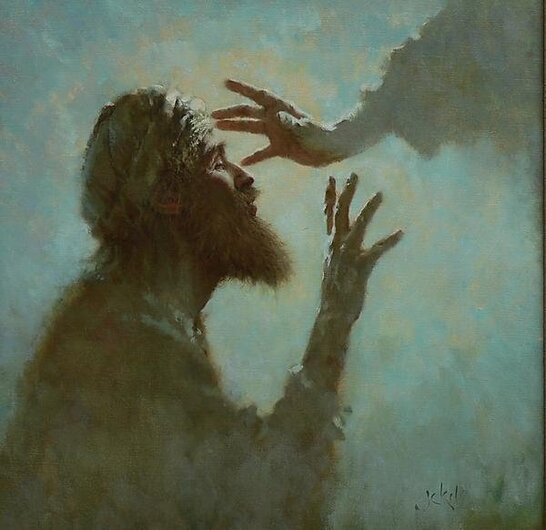
The sixth miracle 1 And as Jesus passed by, he saw a man which was blind from his birth. 2 And his disciples asked him, saying, Master, who did sin, this man, or his parents, that he was born blind? 3 Jesus answered, Neither hath this man sinned, nor his parents: but that the works of God should be made manifest in him. 4 I must work the works of him that sent me, while it is day: the night cometh, when no man can work. 5 As long as I am in the world, I am the light of the world. 6 When he had thus spoken, he spat on the ground, and made clay of the spittle, and he anointed the eyes of the blind man with the clay, 7 And said unto him, Go, wash in the pool of Siloam, (which is by interpretation, Sent.) He went his way therefore, and washed, and came seeing. 8 The neighbours therefore, and they which before had seen him that he was blind, said, Is not this he that sat and begged? 9 Some said, This is he: others said, He is like him: but he said, I am he. 10 Therefore said they unto him, How were thine eyes opened? 11 He answered and said, A man that is called Jesus made clay, and anointed mine eyes, and said unto me, Go to the pool of Siloam, and wash: and I went and washed, and I received sight. 12 Then said they unto him, Where is he? He said, I know not. 13 They brought to the Pharisees him that aforetime was blind. 14 And it was the sabbath day when Jesus made the clay, and opened his eyes. 15 Then again the Pharisees also asked him how he had received his sight. He said unto them, He put clay upon mine eyes, and I washed, and do see. 16 Therefore said some of the Pharisees, This man is not of God, because he keepeth not the sabbath day. Others said, How can a man that is a sinner do such miracles? And there was a division among them. 17 They say unto the blind man again, What sayest thou of him, that he hath opened thine eyes? He said, He is a prophet. 18 But the Jews did not believe concerning him, that he had been blind, and received his sight, until they called the parents of him that had received his sight. 19 And they asked them, saying, Is this your son, who ye say was born blind? how then doth he now see? 20 His parents answered them and said, We know that this is our son, and that he was born blind: 21 But by what means he now seeth, we know not; or who hath opened his eyes, we know not: he is of age; ask him: he shall speak for himself. 22 These words spake his parents, because they feared the Jews: for the Jews had agreed already, that if any man did confess that he was Christ, he should be put out of the synagogue. 23 Therefore said his parents, He is of age; ask him. |
Margin notes:
"Who did sin, this man, or his parents, that he was born blind?" (9:2) - In Jesus' day, many believed that poverty, disease, a physical handicap, or misfortune was a punishment from God. Since this man was born blind, people assumed he sinned while in the womb or his parents were being punished for their transgressions. "But that the works of God should be made manifest in him." (9:3) - Means, "But instead, so that the power of God could be revealed through him." Jesus used the healing of the blind man (and all His miracles) to show God's glory John 11:4). "I must work the works of him that sent me." (9:4) - "I must do the tasks of God who sent me." "I am the light of the world." (9:5) - Jesus is the light of the world. Without Him, there is darkness. This message is re-emphasized from John 1:9, 8:12 and 12:35-36. Jesus will reinforce it again in John 12:46. "He anointed the eyes of the blind man with the clay." (9:6) - "He (Jesus) rubbed the eyes of the blind man with the clay." "The pool of Siloam." (9:7) - The Pool of Siloam (Hebrew for "sent") was located in the southern section of Jerusalem named Siloam. Also called the Pool of Siloah (Nehemiah 3:15), King Hezekiah built it to supply Jerusalem with water (2 Kings 20:20; 2 Chronicles 32:30). "And came seeing." (9:7) - "And returned with his sight." "They brought to the Pharisees him that aforetime was blind." (9:13) - "They brought the formerly blind man to the Pharisees." "It was the sabbath." (9:14) - It was Saturday, the Jewish holy day when work was forbidden. The Pharisees even considered healing a blind man on the Sabbath a sin (9:16). "There was a division among them." (9:16) - When it came to Jesus, the Pharisees were confused and couldn't agree amongst themselves. |