Crucifixion - The slow death


The slow death.
Crucifixion!
Crucifixion!
Crucifixion wasn't just a means of execution; it was a psychological weapon meant to intimidate anyone who challenged the authority of the Roman empire. Crucifixion was designed to inflict maximum pain while slowly killing. Death on the cross was reserved for traitors, slaves, foreigners, and the lowest of criminals. Rome allowed slavery but considered crucifixion so horrendous that it was illegal to crucify a Roman citizen, no matter what their crime. The first public crucifixions took on a carnival atmosphere and attracted large, boisterous crowds. But by the time Jesus hung on the cross, crucifixions had become routine. The loud curious mobs had long disappeared, leaving only Jesus' mother and a handful of followers and accusers to watch the Messiah die. To many of the people of Jerusalem, the Messiah's death was just another ho-hum execution.
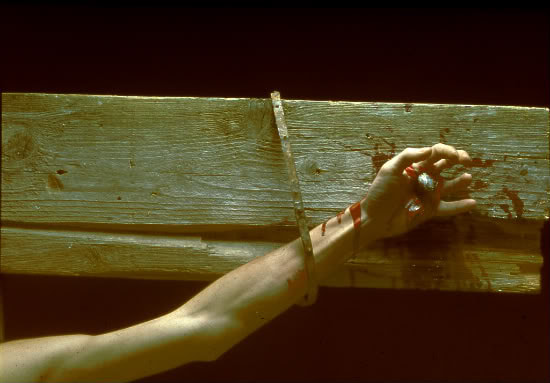
With the jeers of the crowd filling their ears, the prisoners were led to their execution site and stripped naked, adding to their humiliation. Then, primitive iron nails six to eight inches long with two-inch sharpened points were pounded through their hands or wrists with a heavy mallet. Experienced executioners knew precisely where to place the nails to cut the tendons that run the length of the arm up to the shoulders. With severed tendons, the crucified were forced to use their back and shoulder muscles to support their weight as they hung on the cross. Once the wrists of the struggling victim were hammered down, a single nail was driven through both feet to anchor them to the wooden cross. The crucifix was then raised, and the base of the cross dropped into a three-foot-deep hole with a jarring thud. If they had inexperienced or hurried executioners, one or both of the prisoner's wrists could come loose as the cross dropped into place, causing them to fall forward with their feet still fastened to the crucifix. They were then brought back down, screaming and re-nailed.
After the naked, helpless victim was secured and the cross set upright in the air, the crucified would be on full display to the eyes of the taunting crowd, and the deathwatch would begin. Death on the cross was slow. Their gradual physical decline gave the condemned time to think about their pending death as they writhed in agony. The intense physical and psychological misery steadily increased as the sufferer slowly succumbed to dehydration, loss of blood, trauma, shock, fear, pain, and sheer exhaustion. Most died from suffocation when they couldn't hold themselves up on the cross any longer. As the weight of the weakening upper torso collapsed over their diaphragm, breathing became difficult. The victims found they could take air in but couldn't exhale it. The only way to catch a breath was to pull themselves up the cross by their nailed wrists. This tore flesh and tendons and caused horrific pain as the punctured wrists bore the entire weight of the body. Once the crucified raised themselves on the cross, their arm and shoulder muscles quickly cramped and weakened. When they could take the pain no longer, the condemned would sink back down and rest their weight on the nail driven through their feet. Lowering themselves on the cross relieved the pain in the upper torso, but the agony in their feet, ankles, and legs sent throbbing shivers through their body, and the pectoral muscles in the chest again became paralyzed. In the panic for another breath, they would again pull themselves back up the cross by their wrists. If a man passed out, he was quickly jarred awake as his body gasped for air. This up and down struggle was repeated over and over until, finally, death came. In Jesus' case, it took over three hours to die.
If the crucified were still alive when the executioners were ready to leave, their legs were broken to keep them from pushing themselves up the cross for another breath. With shattered legs, death came quickly. It was not until AD 313, that Rome outlawed crucifixion, two hundred and eighty years after Jesus died on the cross.
With the jeers of the crowd filling their ears, the prisoners were led to their execution site and stripped naked, adding to their humiliation. Then, primitive iron nails six to eight inches long with two-inch sharpened points were pounded through their hands or wrists with a heavy mallet. Experienced executioners knew precisely where to place the nails to cut the tendons that run the length of the arm up to the shoulders. With severed tendons, the crucified were forced to use their back and shoulder muscles to support their weight as they hung on the cross. Once the wrists of the struggling victim were hammered down, a single nail was driven through both feet to anchor them to the wooden cross. The crucifix was then raised, and the base of the cross dropped into a three-foot-deep hole with a jarring thud. If they had inexperienced or hurried executioners, one or both of the prisoner's wrists could come loose as the cross dropped into place, causing them to fall forward with their feet still fastened to the crucifix. They were then brought back down, screaming and re-nailed.
After the naked, helpless victim was secured and the cross set upright in the air, the crucified would be on full display to the eyes of the taunting crowd, and the deathwatch would begin. Death on the cross was slow. Their gradual physical decline gave the condemned time to think about their pending death as they writhed in agony. The intense physical and psychological misery steadily increased as the sufferer slowly succumbed to dehydration, loss of blood, trauma, shock, fear, pain, and sheer exhaustion. Most died from suffocation when they couldn't hold themselves up on the cross any longer. As the weight of the weakening upper torso collapsed over their diaphragm, breathing became difficult. The victims found they could take air in but couldn't exhale it. The only way to catch a breath was to pull themselves up the cross by their nailed wrists. This tore flesh and tendons and caused horrific pain as the punctured wrists bore the entire weight of the body. Once the crucified raised themselves on the cross, their arm and shoulder muscles quickly cramped and weakened. When they could take the pain no longer, the condemned would sink back down and rest their weight on the nail driven through their feet. Lowering themselves on the cross relieved the pain in the upper torso, but the agony in their feet, ankles, and legs sent throbbing shivers through their body, and the pectoral muscles in the chest again became paralyzed. In the panic for another breath, they would again pull themselves back up the cross by their wrists. If a man passed out, he was quickly jarred awake as his body gasped for air. This up and down struggle was repeated over and over until, finally, death came. In Jesus' case, it took over three hours to die.
If the crucified were still alive when the executioners were ready to leave, their legs were broken to keep them from pushing themselves up the cross for another breath. With shattered legs, death came quickly. It was not until AD 313, that Rome outlawed crucifixion, two hundred and eighty years after Jesus died on the cross.